
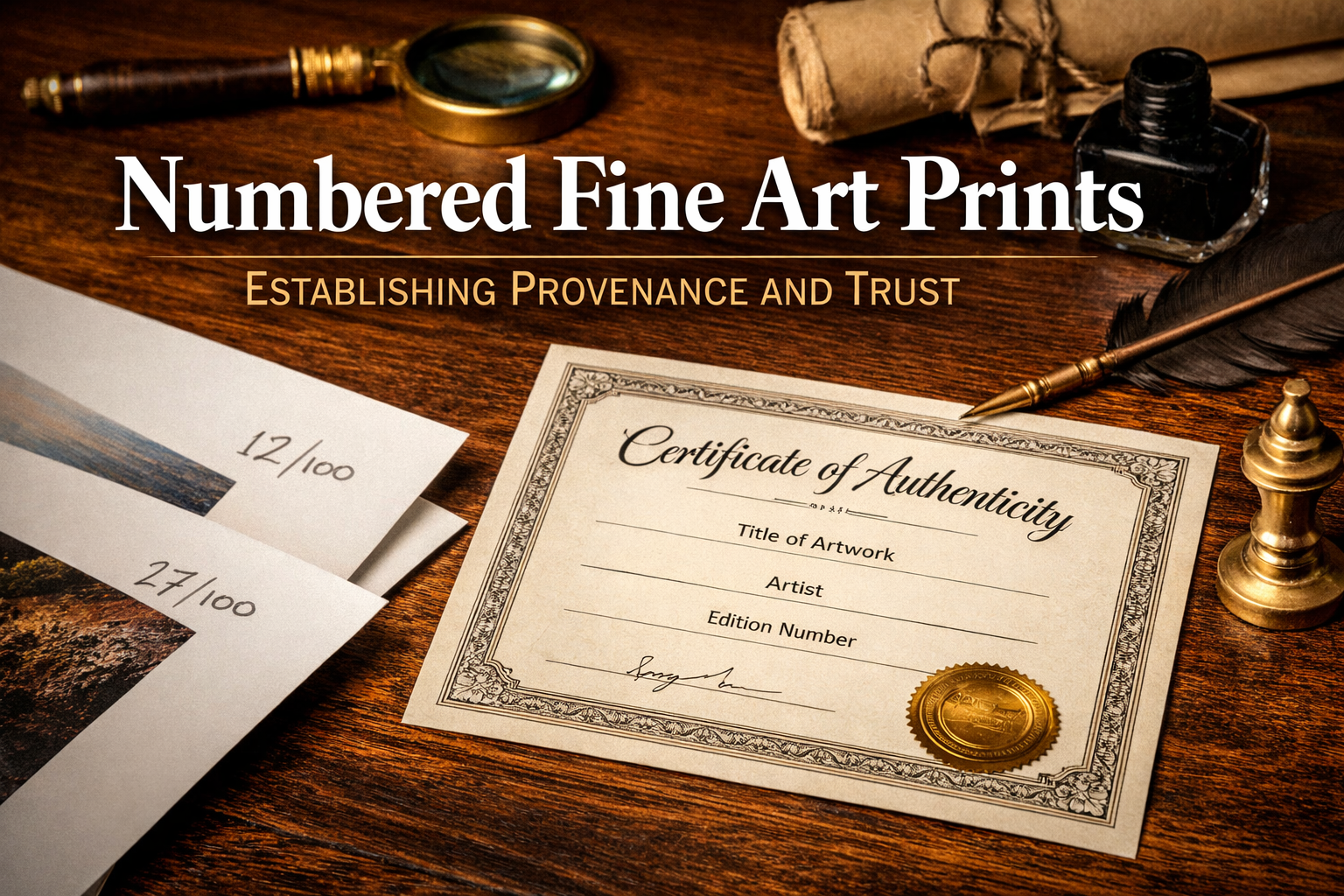
Numbered Fine Art Prints: Establishing Provenance and Trust
In the world of fine art, the value of a piece goes beyond its aesthetic appeal, as provenance and authenticity play crucial roles in determining an artwork’s worth. Numbered fine art prints, accompanied by a Certificate of Authenticity (COA), establish clear provenance and edition transparency. This reassurance not only strengthens buyer confidence but also confirms originality, reducing uncertainty in the art market. This transformation turns prints into credible, collectible works with lasting appeal and investment potential.
Understanding the Importance of Provenance
Provenance refers to the history of ownership of a piece of art. It provides a documented trail that confirms its authenticity and originality. For collectors, knowing the provenance of a piece reassures them that they are investing in genuine artwork. Numbered fine art prints, specifically, are often tied to a limited edition, significantly enhancing their desirability and market appeal.
When an artist releases a limited number of prints, each piece is typically numbered. For example, an artist may produce 100 prints of a specific artwork, marking them as 1/100, 2/100, and so on. This numbering provides clarity about the artwork’s edition size, allowing buyers to understand its rarity. In a market where scarcity drives value, this clarity is vital. It is not uncommon for collectors to pay a premium for lower-numbered prints, as these are often seen as more desirable. The psychological appeal of owning a print that is among the first produced can have a significant impact on a collector’s decision-making process.
The existence of a COA further elevates the importance of provenance. A well-documented COA includes details about the artist, the artwork, and the print’s edition. It serves as a formal declaration that the piece is genuine and has been created by the artist in question. Collectors should prioritize acquiring artworks that come with this essential documentation to safeguard their investment and ensure peace of mind regarding their purchase. The COA can also include information about previous ownership and exhibition history, which can add further value to the piece in the eyes of future buyers.
The Role of Certificates of Authenticity
A Certificate of Authenticity is more than just a piece of paper; it is a crucial element in the art market. It provides buyers with confidence in their purchases. A COA typically includes the artist’s name, the title of the artwork, the medium used, the number of the print in the edition, and sometimes, even the date it was created. This information is vital for both the buyer and any future sellers, as it helps substantiate the piece’s value over time. For instance, if a print is later resold, the COA serves as a foundational component of its provenance, enhancing its appeal to potential buyers.
In a world where art can be easily reproduced, a COA serves as a guarantee of originality. It reduces the risk of acquiring counterfeit artworks, which is a growing concern in the art world. When buyers know that their prints are authentic and come with a COA, their confidence in the investment increases significantly. Furthermore, a COA can enhance the resale value of the artwork, as future buyers are more likely to invest in pieces with proven authenticity. This trend underscores the necessity for artists and galleries to ensure that their works are accompanied by credible documentation.
This emotional depth becomes especially visible in the Blue Series, where blue is used as both structure and atmosphere rather than decoration.
Building Buyer Confidence Through Transparency
Transparency in the art market is essential for fostering trust between artists, galleries, and collectors. Numbered fine art prints with accompanying COAs contribute to this transparency. When buyers can trace the origin and history of a piece, they feel more secure in their decision to invest in it. This transparency is crucial in a market that can sometimes feel opaque and intimidating. For example, knowing the history of an artwork can provide insights into its significance, thus enhancing its value in the eyes of collectors.
Moreover, transparency helps to diminish the stigma surrounding art investments. Many potential buyers hesitate to enter the art market due to fears of fraud or untrustworthy sellers. By providing clear provenance and authenticity, artists and galleries can alleviate these concerns, encouraging new collectors to explore their passion for art. This process not only benefits buyers but also creates a more robust and thriving art ecosystem. Educational initiatives, such as workshops or online courses focused on art collecting, can further enhance buyer understanding and confidence.
The Impact of Edition Size on Value
The edition size of a print significantly impacts its value. Limited edition prints, especially those that are numbered and accompanied by a COA, tend to be more desirable to collectors. As the demand for a specific artist or piece increases, the value of these prints can rise dramatically—a phenomenon commonly observed in the art market. For example, prints from artists such as Andy Warhol and Pablo Picasso have seen appreciation in value due to their limited editions and the high demand for their work. Collectors often view these prints not just as decorative items but as financial assets that can appreciate over time.
For instance, a limited edition print of a renowned artist can appreciate in value as the number of available prints diminishes over time. Collectors often view these prints as investments, understanding that their scarcity will likely lead to a higher resale value. This concept of scarcity driving price is a fundamental principle in the art world and is a key reason why collectors actively seek out limited edition prints. Moreover, the connection between an artist’s growing reputation and the value of their limited editions cannot be overstated—an artist’s rising fame can lead to exponential increases in the value of their works.
Case Studies: Successful Artists and Their Limited Editions
Many successful artists have leveraged the power of numbered fine art prints to build their reputations and increase their market value. For example, contemporary artists like Banksy and Takashi Murakami have created limited edition prints that have skyrocketed in value. These artists often use numbered prints to engage collectors in a playful yet strategic manner, enhancing their allure and market presence. Their ability to create buzz around each release can lead to immediate sell-outs and increased demand on the secondary market.
In the case of Banksy, his limited edition prints often come with a COA, further establishing their authenticity. The combination of his provocative art and the assurance of authenticity has led to immense popularity and high prices at auctions. This trend demonstrates the effectiveness of numbered prints and COAs in establishing clear provenance and enhancing buyer confidence. Similarly, Takashi Murakami’s vibrant and whimsical prints have garnered attention and value through their limited availability, making them highly sought after by collectors. Both of these artists illustrate how the right combination of creativity, marketing, and transparency can lead to substantial financial success.
Reducing Uncertainty in the Art Market
The art market can often feel uncertain and intimidating, particularly for new collectors. However, the introduction of numbered fine art prints with COAs has significantly reduced this uncertainty. Buyers are more likely to invest in pieces that come with a guarantee of authenticity and clear provenance. This reduction of risk is crucial for encouraging new collectors to join the art market and make informed investment decisions. It also empowers sellers to present their works with confidence, knowing that they are backed by solid documentation.
Additionally, as the market continues to evolve, more artists and galleries are adopting these practices to create a more trustworthy environment. This shift is essential for attracting a broader audience and encouraging more individuals to explore art collecting. The reduction of uncertainty not only benefits buyers but also artists who can gain a more substantial following as a result. As trust grows, so does the overall health of the art market. Initiatives that promote education and transparency will likely contribute to sustained growth in collector engagement and investment.
The Future of Fine Art Prints and Buyer Trust
As the art market continues to develop, the importance of numbered fine art prints and COAs will only grow. Buyers will increasingly seek out pieces that come with a guarantee of authenticity and clear provenance. This trend will further establish the significance of transparency in the market, ultimately benefiting both artists and collectors. The advent of online platforms has also played a role in enhancing the accessibility of art, but it has made the need for authenticity verification even more critical.
In the future, we may see advancements in technology that enhance the way provenance is tracked. Blockchain technology, for instance, holds promise in providing immutable records of ownership and authenticity. This could revolutionize the way art is bought and sold, making it even easier for buyers to trust their investments. By using blockchain, artists can ensure that each print’s history is transparent and verifiable, significantly boosting buyer confidence. This technological integration might even lead to the creation of digital certificates that accompany physical artworks, streamlining the process of verification.
Q&A: Addressing Common Concerns
As with any investment, potential buyers often have questions about the art market and the importance of numbered fine art prints. Here are some common concerns addressed:
1. What should I look for when purchasing a fine art print?
When buying a fine art print, ensure it is accompanied by a Certificate of Authenticity. Check the edition size, the artist’s reputation, and previous sales to assess its value. Additionally, consider the condition of the print and whether it has been framed or preserved properly. A well-preserved print not only retains its aesthetic quality but can also command a higher resale price.
This is also why blue portrait art feels so powerful in modern interiors, where color directly influences the emotional tone of a space.
2. How does the edition size affect the print’s value?
A smaller edition size typically increases a print’s value as it indicates rarity. Limited edition prints are more desirable to collectors, especially if they are numbered and authenticated. The market often rewards collectors who invest in artists with limited releases that hold historical significance. In this respect, understanding the nuances of an artist’s career and market trends can be incredibly beneficial for potential buyers.
3. Can I trust online art sellers?
While many reputable online art sellers exist, it’s essential to do thorough research. Look for sellers who provide COAs and have positive reviews from previous customers. Additionally, consider platforms that offer buyer protection policies to safeguard your investment. Engaging with trusted online communities can also provide insights into which sellers are reputable and which to avoid.
4. What happens if a print does not come with a COA?
Without a Certificate of Authenticity, the print’s value may diminish. Buyers should be cautious when considering prints without this documentation, as it raises concerns about authenticity. It is recommended to seek out artworks that come with verified provenance to ensure you are making a sound investment. If you encounter a print without a COA, consider consulting with experts or appraisers who can help assess its legitimacy.
Conclusion: The Value of Numbered Fine Art Prints
In conclusion, numbered fine art prints accompanied by a Certificate of Authenticity play a vital role in establishing clear provenance and edition transparency. This reassurance strengthens buyer confidence and confirms originality, significantly reducing uncertainty in the art market. As the demand for art continues to grow, the importance of authenticity and provenance will remain paramount for both artists and collectors. In a rapidly evolving marketplace, these elements are crucial for maintaining trust.
Investing in fine art, especially numbered prints with COAs, transforms these pieces into credible, collectible works with lasting appeal. The art market is evolving, and embracing transparency is essential for fostering trust. As buyers become more educated and discerning, they will increasingly seek out artworks that offer both beauty and a secure investment.
For those looking to delve deeper into the intricacies of the art market, consider exploring related topics such as fine art paper types and the impact of edition scarcity on pricing. Furthermore, understanding how numbered prints with COAs enhance buyer trust will provide valuable insight into making informed decisions in your art collection journey.
References
Art Market Trends Organization – www.artmarkettrends.org
