
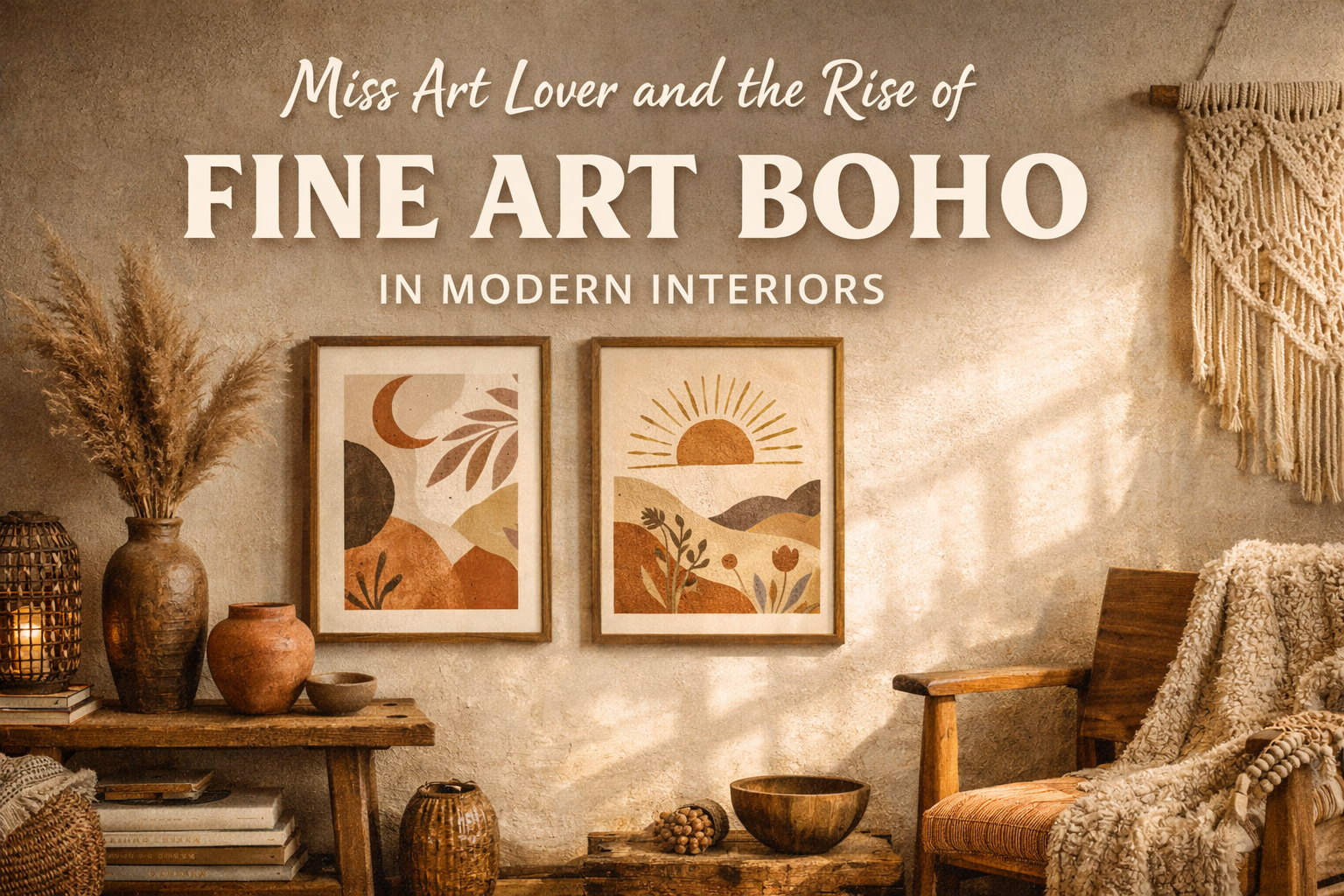
Boho fine art prints in modern interiors – why this style is taking over
Boho art is no longer a niche aesthetic reserved for eclectic homes and creative studios. It has quietly evolved into one of the most influential visual directions in modern interior design. Today, you will find boho-inspired fine art prints in minimalist apartments, Scandinavian homes, boutique hotels, and even luxury penthouses.
This shift is not random.
It reflects a deeper change in how people want their spaces to feel.
Clean interiors became popular for a reason. They bring clarity, calm, and simplicity. But over time, something was lost. Many homes started to feel cold, almost anonymous. That is where boho fine art steps in. It reintroduces warmth, personality, and emotional depth without breaking the clean structure of modern design.
If you have already explored how fine art prints can transform modern homes, you will recognize this shift immediately. Art is no longer just decoration. It defines the atmosphere.
In particular, collections like the Blue Series, where modern portrait art meets collectible fine art prints show how contemporary art can balance expression with restraint. These works do not fight the space. They enhance it.
And that is exactly why this style is taking over.
Why boho art fits perfectly into modern interiors
Modern interiors are built on simplicity. Clean lines. Neutral palettes. Functional furniture. Everything has a purpose. But when everything becomes too controlled, the space risks losing its soul.
Boho art solves this problem in a subtle way.
It introduces softness without chaos.
Instead of adding more objects or visual noise, a single artwork can shift the entire energy of a room. This is especially clear when looking at curated spaces like those explored in modern boho wall art styling for living rooms, where balance between minimalism and warmth becomes the defining element.
There are a few key reasons why this works so well.
- Contrast between clean interiors and organic art
- Balance between structure and softness
- Identity through visual storytelling
You do not need to redesign an entire room. One strong piece can redefine everything.
What defines boho fine art prints today

High-quality materials like Hahnemühle paper bring depth and texture to fine art prints.
Boho art has evolved. It is no longer just layered textiles and vintage references. The modern version is more refined and intentional.
It combines:
- organic shapes
- muted tones
- subtle contrast
- human-centered compositions
- visible texture
But more importantly, it communicates emotion.
That is why collectors are increasingly drawn to curated platforms and guides like this collector’s guide to fine art prints, where the focus is not just on visuals, but on meaning, scarcity, and quality.
Modern boho art does not try to impress.
It tries to connect.
And that is a major difference.
How to style boho fine art prints in your home
Styling art should feel natural. Not forced.
Boho art makes this easier because it adapts to its surroundings.
Keep the surrounding space simple. Let the artwork breathe.
Use natural materials like wood, linen, and ceramics. These textures support the organic feeling of the artwork.
Choose the right size. Scale matters more than most people think.
If you are unsure where to start, guides like the rise of fine art boho in modern interiors show how a single piece can define an entire room without overwhelming it.
Work with color harmony. Even expressive art can feel calm if the palette fits the space.
Why collectors are choosing limited edition prints
There is a clear shift happening in the art market.
People are moving away from mass-produced posters and toward:
- limited editions
- signed works
- collectible pieces
The reason is simple.
Ownership.
When you explore why limited edition fine art prints are considered an investment, you begin to understand that art is not just visual. It holds value over time.
Scarcity creates demand.
And demand creates value.
This is further reinforced when you look at how scarcity directly impacts art value. Limited runs are not just a marketing tool. They define collectability.
The importance of materials in fine art prints

Large-scale artwork creates a strong focal point while maintaining a calm and balanced interior.
Not all prints are created equal.
Material quality defines everything.
High-end prints are typically produced using giclée printing techniques on museum-grade paper. If you want to understand the technical difference, this guide to Hahnemühle fine art printing explains why paper choice impacts depth, texture, and longevity.
In short:
- better paper = better detail
- better ink = longer lifespan
- better process = higher value
Collectors notice this immediately.
Hand-finished art and uniqueness
This is where fine art prints become something more.
Some pieces are hand-finished.
Small variations. Subtle touches.
This creates uniqueness even within a limited edition.
It moves the artwork closer to an original.
When combined with numbering and documentation, this creates trust. That is why systems like numbered art prints with a certificate of authenticity have become essential in modern collecting.
Each piece becomes:
- traceable
- verifiable
- collectible
Provenance and trust in modern art collecting
Trust matters more than ever.
With so much digital content, collectors want proof of authenticity.
This is where provenance comes in.
Understanding how provenance builds trust in art helps explain why serious buyers prioritize documented works.
It is not just about owning art.
It is about owning verified art.
This is also aligned with broader art market standards, as described by institutions like Artsy’s explanation of provenance in art, where ownership history directly affects value and authenticity.
The emotional impact of portrait-based boho art
Abstract art creates atmosphere.
Portrait art creates presence.
A face changes a room.
It introduces identity. Emotion. Story.
This is especially true in collections that focus on controlled palettes and expressive structure. If you explore ethical portrait-based boho art, you will see how modern artists combine visual simplicity with emotional depth.
This creates:
- calm spaces
- human connection
- lasting impact
Why this trend is growing right now
Several factors are driving this shift.
People want authenticity.
Homes matter more than ever.
Minimalism is evolving.
And art is becoming accessible.
Even lifestyle categories reflect this shift toward natural and intentional choices. You can see the same mindset in areas like clean and natural skincare routines, where simplicity and quality replace excess.
The same principle applies to interiors.
Less noise.
More meaning.
A new way to think about interiors

A single boho fine art print can transform a clean modern space into something warm and personal.
The biggest change is not visual.
It is emotional.
People want homes that feel:
- calm
- personal
- grounded
Art is no longer optional.
It is essential.
And boho fine art prints sit perfectly in that space.
Conclusion
Boho fine art prints represent more than a trend. They reflect a shift toward intentional living, emotional interiors, and meaningful ownership.
They bring warmth into minimal spaces.
They create identity without chaos.
And they offer something increasingly rare.
Presence.
As modern interiors continue to evolve, art will not become louder.
It will become more precise.
More human.
And more important.
