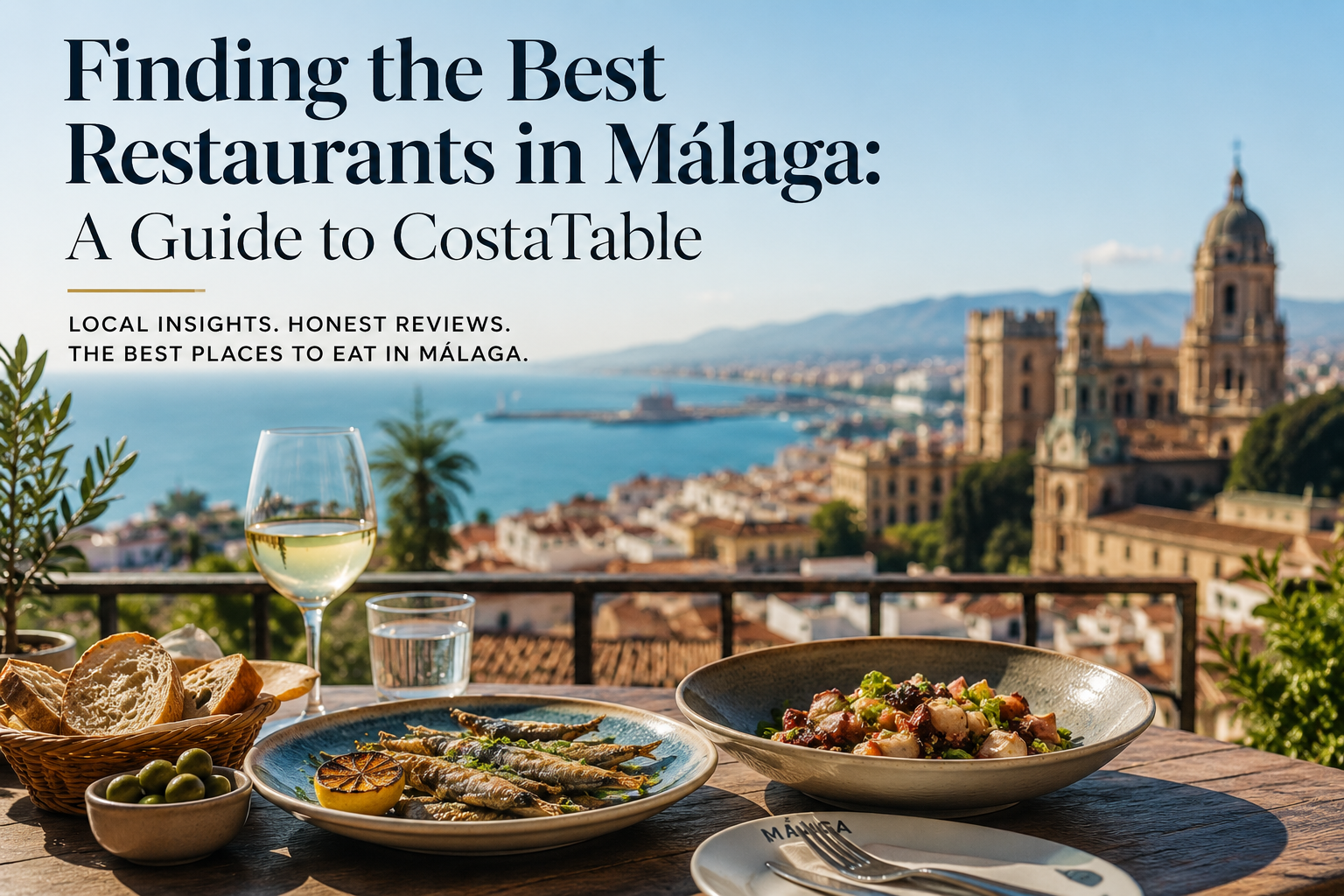
Finding the Best Restaurants in Málaga: A Guide to CostaTable
When you land in Málaga for the first time, the city hits you with contradictions. There’s the postcard version—the Cathedral, the beach, the sunset—and then there’s the real Málaga. The one where locals eat. The one where you actually want to spend your time.
We’ve written about that gap before in our guide to local things to do beyond the tourist trail, and food is where it shows up most.
The hardest part isn’t finding a restaurant. It’s finding the right one. There are hundreds. Most are designed for tourists. Some are genuinely excellent. The problem is figuring out which is which without eating your way through every street in the city center.
That’s where CostaTable comes in. And I’m not saying this because I’m writing about them. I’m writing about them because they actually solved a problem I had every time I visited.
The Restaurant Problem in Málaga
Málaga’s food scene has exploded in the last few years. The city went from being a pit stop on the way to the beaches to being an actual destination for people who care about eating well. That’s great. It’s also overwhelming.
You’ve got chiringuitos on the beach serving espetos at sunset. You’ve got tapas bars where old men stand at zinc counters drinking wine at 8 in the morning. You’ve got modern restaurants in Soho with young chefs doing interesting things. You’ve got market stalls at Atarazanas selling fresh seafood. You’ve got fine dining. You’ve got hidden gems down alleys most tourists never find.
We’ve put together a full tour guide to the Atarazanas market if you want to explore it properly before deciding where to eat.
All of that is real. All of it is worth experiencing. But how do you actually find any of it if you’re visiting for a week?
The obvious answer is Google or TripAdvisor. But here’s the problem with those: they’re designed to show you restaurants that are optimized for being found on Google and TripAdvisor. Not restaurants that are necessarily good. That’s a different thing entirely.
The restaurants that matter most in Málaga—the ones locals actually go to, the ones that have been doing the same thing for decades without needing to advertise—those places often don’t show up in the usual searches. They’re not trying to be found. They’re just trying to feed people.
What Makes CostaTable Different
 CostaTable isn’t trying to be everything. It’s not a general restaurant app. It’s specifically built for Málaga, by people who actually know Málaga.
That matters more than you’d think.
The site is organized the way you actually eat, not the way restaurant algorithms want you to search. They’ve broken Málaga’s food scene into actual categories that make sense: where to eat brunch, where to get breakfast, where to find casual dinner, where to find hidden spots, that kind of thing.
We’ve explored this same food culture from our side too, in our piece on discovering Málaga’s culinary treasures.
More importantly, the descriptions are written by people who actually eat in these places. Not AI-generated descriptions. Not template copy. Real observations about what makes a restaurant worth going to.
I noticed this immediately when I started looking through their brunch guide. Most restaurant sites describe their food and call it a day. CostaTable’s brunch section actually talks about why you’d want brunch in Málaga in the first place, what the different styles are, and which neighborhoods have which vibes. That’s useful information before you even look at individual restaurants.
Finding Brunch the Right Way
If you’re visiting Málaga and you want brunch, you have options. But the brunch scene here isn’t the same as Instagram-brunch in London or Brooklyn. It’s its own thing.
Málaga historically wasn’t a brunch city. The culture here is coffee and tostadas at 8 AM, then lunch at 2:30 PM. But over the last decade, a real brunch scene has developed, particularly in Soho and the city center.
The thing is: not all brunch in Málaga is the same. Some places are doing modern fusion stuff. Some are doing wellness bowls. Some are high-end restaurants serving tasting menus at 11 AM. Some are just decent cafés that serve eggs.
If you don’t know the difference, you could end up at a place that’s technically “good” but not actually what you wanted. CostaTable’s brunch guide actually categorizes these by style—rooftop glamour, health-focused, traditional, that kind of thing. So you’re not just finding brunch. You’re finding the type of brunch you actually want.
That sounds simple, but it saves you a lot of wasted time and bad decisions.
Coffee and Breakfast: The Foundation
Before brunch became a thing, Málaga had coffee and breakfast figured out. And honestly, it’s still better than the brunch.
The traditional Málaga breakfast is a tostada (thick toasted bread) with olive oil and tomato, plus a café con leche (espresso with warm milk). You get it standing at a local bar. It costs about three euros. It takes 15 minutes. It’s perfect.
But the coffee culture here has evolved. There’s a serious third-wave coffee movement now. There are places with single-origin beans, proper extraction techniques, baristas who actually trained. And then there are the old-school cafés where they’ve been making coffee the same way since 1987 on machines that look like they could break at any second. Both are worth experiencing.
The problem is finding the places that are actually good versus the places that are just existing. CostaTable’s breakfast café guide does this sorting for you. They tell you where to go if you want excellent coffee. Where to go if you want the authentic local experience. Where to go if you want somewhere nice to sit and read for an hour.
They’ve also got a separate guide to the loveliest cafés in the old town, which is genuinely useful if you’re exploring the historic center and want somewhere good to stop.
Our own tour guide to Málaga’s old town covers the streets around those cafés if you want more context before you go.
Beyond the Obvious Categories
Here’s what impressed me most about CostaTable: they’ve thought about the actual ways people eat in Málaga, not just the obvious categories.
You get guides for hidden spots. For sunset dinners. For romantic dinners. For casual dinners. For fine dining. For business lunches. For lunch spots that won’t make you broke. That’s not just different restaurants listed multiple times. That’s actually different information about the same city based on what you’re trying to do.
Their hidden gems guide goes a step further, covering lesser-known spots most visitors never find on their own.
If you’re visiting Málaga for a week, you’re probably going to have different meals with different purposes. You might want a business lunch on one day, casual dinner with friends on another, maybe a romantic dinner somewhere nice. The restaurant that works for one of those won’t work for the others.
Most restaurant guides treat all restaurants like they’re interchangeable. CostaTable doesn’t. They understand that context matters.
How to Actually Use This
If you’re planning a trip to Málaga and you want to eat well without spending all your time on Google, here’s what I’d actually do:
Start by looking at what you want to do. Are you visiting for one day or a week? Are you on a tight budget or willing to spend? Do you want to eat like a tourist or like a local? Are you interested in fine dining or just good food?
Then go to CostaTable and find the guide that matches what you’re looking for. Read the actual descriptions, not just the restaurant names. You’ll get a sense of what’s actually happening in the city.
Then pick a few places for different meals. Mix the hidden spots with the nicer places. Do breakfast at a proper café. Do lunch at a market-adjacent restaurant. Do dinner somewhere with a view if you’re into that. Their lunch guide is a solid starting point if you want options beyond the streets right around the Cathedral.
That’s how you actually eat in Málaga instead of just eating at Málaga.
One More Thing
The Málaga tourism board has good information if you want the official story about what to do in the city. You can find them at the Málaga tourism website if you need logistics, transport information, or cultural context.
For everything else worth doing on this stretch of coast, our bucket list guide to the Málaga coast rounds up 20 things worth your time.
But for the actual food? CostaTable is better. They know the scene. They’ve done the work. And they’re not trying to sell you on tourist traps.
That’s the difference between a good restaurant guide and an actually useful one.